
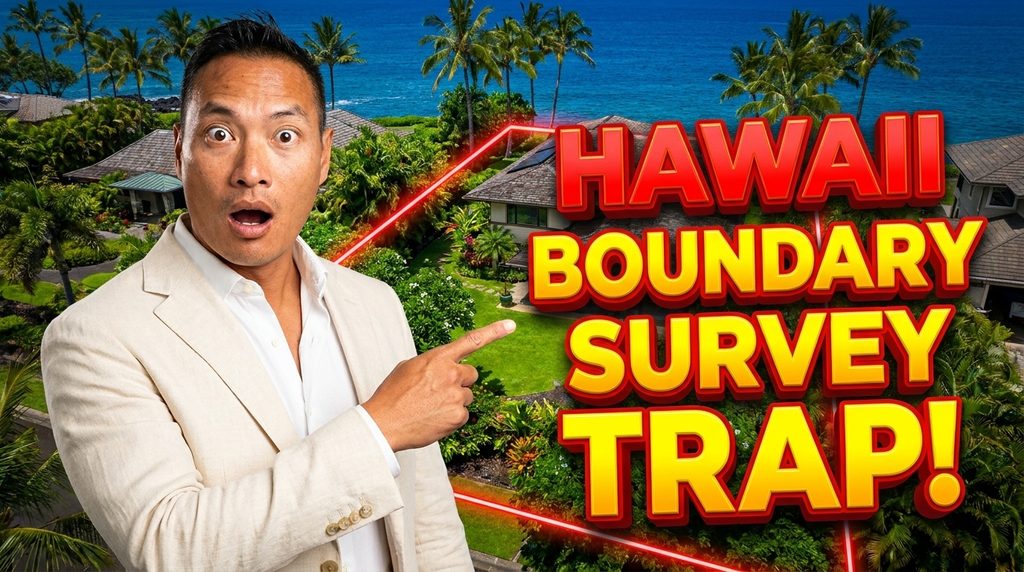
A wall six inches over the property line can be a non-issue in Hawaiʻi. Seven inches can turn into an expensive conversation. The difference comes from a statute most owners have never heard of — worth knowing before you buy, build, or list.
I’m Jason Wong (B), MBA, Principal Broker of Island Dragonfly LLC in Honolulu. In this short explainer I walk through what Hawaiʻi’s “de minimis structure position discrepancy” law actually says, where the tolerances stop, and when a boundary survey earns its cost many times over.
WHAT THE LAW SAYS
If an improvement — a wall, fence, driveway, or planter — was legally constructed along what was reasonably believed to be the boundary, and the most recent survey shows it off by only a small amount, Hawaiʻi treats that gap as de minimis. The tolerances are set by property class:
0.25 feet — commercial, industrial, and multi-unit residential property 0.5 feet — all other residential property 0.75 feet — agricultural and rural property 1.5 feet — conservation property
Within those limits, the discrepancy is not treated as an encroachment, is not a basis for a zoning violation, and cannot support an adverse possession claim.
THE CONDITIONS MOST PEOPLE MISS
If the improvement is removed or substantially damaged, the replacement must be built to the most recent survey. Maintenance, repair, and liability stay with the owner who built it — or that owner’s successor in interest. And past the tolerance, it is an ordinary encroachment with ordinary consequences: title insurance, financing, future permits, and your relationship with the neighbors. Remedies run from an encroachment agreement or easement to a boundary adjustment or relocation — each with a cost.
WHEN A SURVEY MATTERS MOST
Before buying property with walls, fences, driveways, or mature landscaping near the lines. Before building anything close to a boundary — a garage, a pool, an addition. On shoreline property, where the certified shoreline and the shoreline setback add lines of their own. And on high-value property, where a few inches can decide a view corridor, an access easement, or buildable area.
Hawaiʻi also runs two title systems — Land Court and the Regular System — and a single property can carry history in both. A licensed Hawaiʻi land surveyor plus a careful reading of the title report turns assumptions into facts.
I would much rather have the survey conversation while everyone still has options than after the new gate has been fabricated in Italy.
Buying, selling, or holding in Hawaiʻi and want a clear read on the lines before you commit? Reach out — consultations in English and Cantonese, across all six major islands.
Jason Wong (B), MBA
Principal Broker Island Dragonfly LLC
RB-22819 / RB-24348
Personal site: https://jasonwong.us
Brokerage: https://islanddragonfly.com
Educational information only, current as of the upload date — not legal advice. Boundary questions turn on your specific parcel, survey, and title. Consult a licensed Hawaiʻi land surveyor and your attorney.
#HawaiiRealEstate #HonoluluRealEstate #OahuRealEstate #MauiRealEstate #BigIslandRealEstate #KauaiRealEstate #HawaiiHomes #HawaiiProperty #BoundarySurvey #LandSurvey #PropertyLines #Encroachment #HawaiiLandCourt #TitleInsurance #RealEstateTips #HomeBuyingTips #HawaiiRealtor #IslandDragonfly #LuxuryRealEstate #HawaiiInvestment #BuyingInHawaii #MovingToHawaii #HawaiiRelocation #ShorelineSetback #RealEstateEducation #HawaiiBroker #PropertySurvey #InternationalBuyers #OceanfrontProperty #HawaiiLaw
Leave a Reply