
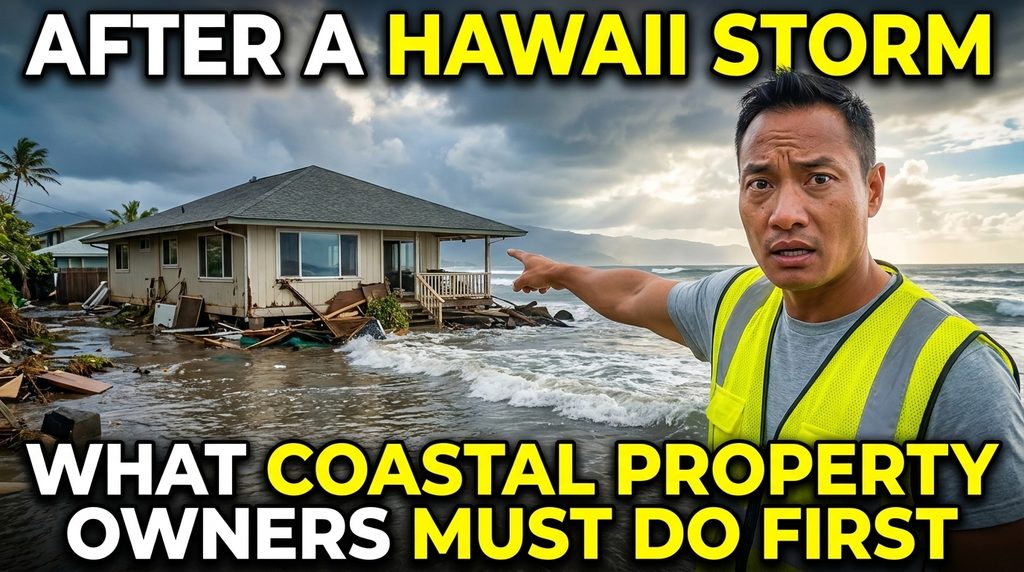
Hawaiʻi has been through a hard year of weather. After a major storm, the most valuable thing a coastal property owner can do is not cosmetic and it is not urgent-looking. It is documentation.
This segment walks through the five-step checklist I give owners on Oʻahu, Maui, Kauaʻi, Molokaʻi, Lānaʻi and the Big Island after severe weather — whether or not selling is anywhere on the horizon.
What’s covered:
1. Photograph before cleanup changes the scene. Roof, exterior walls, windows and doors, lānai, pool equipment, drainage, retaining walls, shoreline structures, landscaping, interior water intrusion — plus any movement, cracking, undermining, debris impact or erosion on the ocean side.
2. Contact your insurer or licensed producer promptly. Report the claim, get the claim number, understand your deadlines, keep every receipt, and take reasonable steps to prevent further damage. Don’t throw damaged material away before the insurer has had the chance to inspect it where inspection is required.
3. Inspect the shoreline. Did the beach profile change? Did erosion expose foundations, utilities, septic or drainage? Did a seawall, revetment or stairway move or fail? If emergency sandbags went in, document who installed them and under what authorisation — an emergency doesn’t make the paperwork disappear once the weather clears.
4. Check government notices and mapping. Warnings, inspection requirements, emergency permitting. Where damage is severe, current floodplain, shoreline setback and building rules may govern what can be repaired or rebuilt — on Oʻahu, damage above certain 50% thresholds can trigger current requirements depending on the rule involved.
5. Update the disclosure file. Water intrusion, structural damage, a new claim, shoreline erosion, damage to a coastal structure, government correspondence — none of that becomes ancient history because the sun came back out. Keep the reports, the claim information, the invoices, the permits and any engineer’s report.
A storm-damaged property can still sell. A repaired property can sell. Even a property with a pending claim can sometimes sell with the right legal, insurance and escrow structure. Ambiguity is what’s expensive.
If you were affected by recent storms: follow current National Weather Service and emergency management guidance, contact your insurer first, check with your county before starting repairs, and use licensed engineers, contractors, surveyors and Hawaiʻi counsel. Statewide preparedness and recovery information: ready.hawaii.gov. Insurance questions: Hawaiʻi Insurance Division, cca.hawaii.gov/ins or 1-844-808-DCCA (3222). NFIP flood claims: floodsmart.gov. Kauaʻi residents can report property damage through the county’s recovery portal — those reports help establish the county’s case for state and federal assistance.
Questions about documentation, disclosure or coastal condition on a Hawaiʻi property? I’m happy to talk through it, with no expectation that you’re selling anything.
Jason Wong (PB), MBA — President & Principal Broker Island Dragonfly LLC · RB-22819 / RB-24348 🌐 https://jasonwong.us · https://islanddragonfly.com
General real estate commentary. Not insurance, legal, engineering, disaster-recovery, tax or permitting advice.
#HawaiiRealEstate #OahuRealEstate #HonoluluRealEstate #KauaiRealEstate #MauiRealEstate #BigIslandRealEstate #HawaiiOceanfront #CoastalProperty #HawaiiHomeowners #StormDamage #HurricanePreparedness #FloodInsurance #SellerDisclosure #ShorelineSetback #IslandDragonfly
Leave a Reply